Modern commercial properties are increasingly vulnerable to severe weather events, climate change, and the mounting pressures of urbanization. In light of these challenges, businesses and property owners are seeking robust strategies to enhance the longevity and safety of their buildings. Choosing the right commercial restoration contractor is a critical step toward fortifying properties against both foreseeable threats and unexpected emergencies. These contractors offer specialized expertise in repairing, renovating, and future-proofing commercial structures to meet diverse needs.
Effective restoration focuses not only on immediate repair but also on comprehensive improvements, incorporating resilient design elements, advanced materials, and sustainable practices that ensure long-term performance. Such strategies are vital in protecting investments, supporting business continuity, and promoting occupant well-being.
Understanding Commercial Restoration
Commercial restoration refers to the process of returning existing commercial buildings to a state of renewed operation and visual appeal. This often involves repairing structural damage, updating obsolete systems, addressing health and safety concerns, and improving energy efficiency. As properties age or face damage due to disasters or neglect, restoration is essential to maintain compliance with evolving regulations and contemporary standards. By investing in restoration, property owners can preserve value, extend the lifespan of their assets, and unlock new uses for them.
The scope of restoration can vary from targeted repairs—such as fixing storm damage or remediating water intrusion—to comprehensive overhauls that include upgrades to mechanical, electrical, and plumbing systems. The goal is not only to restore the building to its previous state but also to enhance it in ways that anticipate future needs and reduce its vulnerability to ongoing risks.
Importance of Resilience in Commercial Properties
Resilience is the capacity for buildings to absorb shocks, adapt to disruptions, and recover quickly from adversity. For commercial properties, investing in resilience means implementing solutions that safeguard occupants and operations from a variety of risks, including natural catastrophes, technological failures, and economic volatility. Buildings engineered or retrofitted for resilience are better equipped to withstand events such as floods, earthquakes, and windstorms, minimizing costly downtime and liability exposure.
Enhancing building resilience also makes properties more attractive to prospective tenants and investors, who are increasingly prioritizing safety and sustainability. A focus on resilience aligns with environmental, social, and governance (ESG) criteria, building long-term trust with stakeholders and supporting broader community stability.
Adaptive Reuse as a Restoration Strategy
One of the most effective approaches to commercial restoration is adaptive reuse, a practice that transforms old or underutilized buildings for new purposes. Rather than demolishing aging structures, adaptive reuse preserves architectural heritage while decreasing construction waste and reducing environmental impact. Notable examples include converting warehouses into tech offices or transforming vacant retail spaces into vibrant healthcare or educational centers.
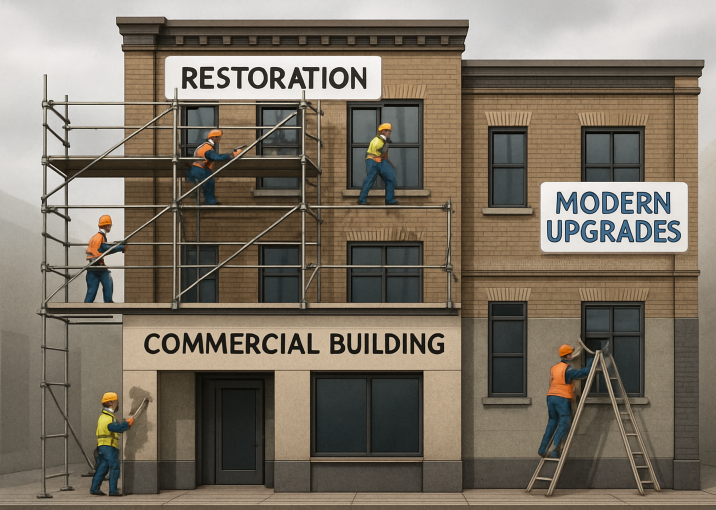
Adaptive reuse supports sustainable urban development by maximizing existing resources and helping cities address housing and commercial needs without the environmental burden of new construction. As highlighted by ArchDaily, adaptive reuse aligns with both climate priorities and market demands for more flexible, future-ready real estate.
Innovative Materials and Technologies
Advanced materials and digital solutions are transforming commercial restoration, making buildings stronger, safer, and smarter. For instance, self-healing concrete actively repairs cracks before they worsen, extending a structure’s durability. High-performance insulation materials significantly enhance thermal efficiency, reducing energy consumption and operational costs. Smart building systems further enhance resilience by providing real-time monitoring for fire, leaks, or security breaches—helping building managers respond proactively to emerging threats.
The widespread adoption of these innovations can significantly reduce maintenance needs and repair costs while enhancing tenant comfort and improving environmental performance.
Sustainable Practices in Restoration
Sustainability is a core principle in modern commercial restoration, with property owners increasingly seeking energy-efficient upgrades and eco-friendly building solutions. Sustainable restoration practices include installing LED lighting, renewable energy systems, and water-saving fixtures. Use of low-VOC paints, recycled building materials, and green roofs further reduces the environmental footprint and attracts health-conscious occupants.
Obtaining green building certifications such as LEED or WELL can enhance marketability. Early consultation with insurance providers and sustainability experts is recommended to ensure risk mitigation strategies are in place from the project’s outset, which helps avoid costly pitfalls.
Case Studies of Successful Restoration Projects
Real-world examples demonstrate the tangible benefits of strategic restoration. In Bloomfield, CT, the conversion of a former nursing home into contemporary apartments injected new vitality into a stagnant property sector while addressing regional housing shortages. By integrating energy-efficient systems and modern amenities, the project not only preserved the building but also made it a valuable community asset. Similar projects across cities have focused on revitalizing brownfields, outdated malls, and office parks, showing that with vision and strategic planning, nearly any commercial space can be transformed for future relevance.
Challenges and Solutions in Commercial Restoration
Common Challenges
- Adhering to modern building codes and accessibility requirements
- Controlling restoration costs and staying within budget
- Coordinating complex upgrades with minimal business disruption
- Addressing unknown structural vulnerabilities or hazardous materials
Strategic Solutions
Overcoming these hurdles requires thorough project planning, the engagement of qualified architects and engineers, and transparent communication with stakeholders. Leveraging available incentives, such as tax credits for historic preservation or rebates for sustainable systems, can make projects more financially viable. Early stakeholder engagement, particularly with insurers and regulatory bodies, helps to preempt complications and streamline regulatory approvals.
Final Thoughts
Commercial property owners face increasing responsibilities as environmental, social, and regulatory demands become increasingly complex. By embracing adaptive reuse, leveraging innovative technologies, and prioritizing sustainable restoration, stakeholders not only protect their investments but also help pave the way for resilient, thriving urban communities of the future.
Please visit my site, Itbetterthisworld, for more details.