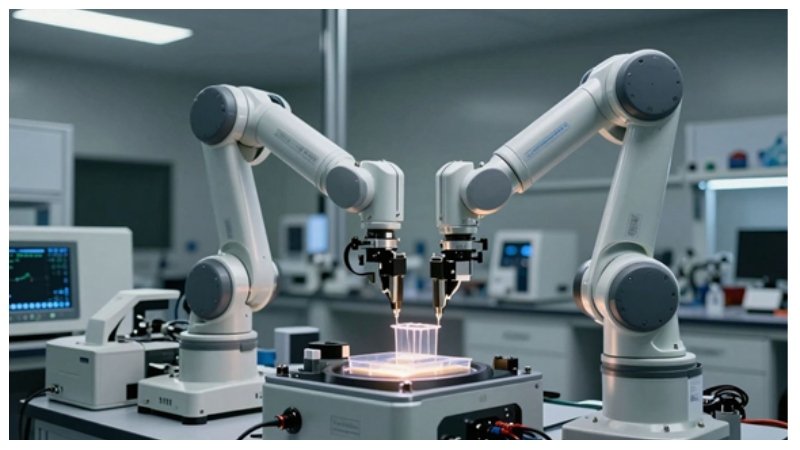
Increasing Throughput with Reduced Manual Labor
Labs today are processing more samples than ever before. Doing this manually just doesn’t cut it anymore. Think about all the pipetting, sorting, and basic analysis that takes up valuable time. Software for automating lab workflows takes these repetitive tasks and handles them. This means labs can process a lot more samples in the same amount of time, speeding up research without losing any accuracy. It’s a big change from how things used to be done.
Automating Time-Consuming Sample Preparation
Sample prep is often the slowest part of any lab process. It involves many steps, and each one is a chance for error or delay. Automated systems can handle these intricate preparation steps with precision. This frees up scientists from tedious work. The result is faster turnaround times and more reliable starting points for experiments. This kind of automation is key for labs that need to get results quickly.
Enhancing Efficiency in High-Throughput Screening
High-throughput screening (HTS) is vital, especially in drug discovery. It involves testing thousands, sometimes millions, of compounds. Doing this manually is practically impossible. Lab automation systems are built for this. They can run these massive screening campaigns efficiently. Software manages the process, records data, and analyzes results in real-time. This makes HTS much faster and more effective than traditional methods.
Achieving Unwavering Accuracy and Reproducibility
Manual lab work, no matter how careful, can introduce small variations. Think about pipetting the same liquid a hundred times; your hand might shake just a little differently each time. Automated laboratory systems take the human element out of these repetitive steps. This means every sample is treated the same way, leading to results that are not just accurate but also consistently reproducible. This level of precision is what modern research and diagnostics depend on.
Eliminating Human Error and Inconsistencies
Human error is a real thing in any lab. Mistakes can happen during sample handling, data entry, or even just reading a measurement. Automation systems are designed to follow protocols precisely, every single time. This drastically cuts down on the chances of a slip-up. By removing manual steps, labs can significantly reduce variability and ensure that results are reliable, batch after batch. This consistency is key to building trust in the data generated.
Meeting Regulatory and Quality Control Standards
Many industries, especially pharmaceuticals and clinical testing, have strict rules they need to follow. These regulations demand a high level of accuracy and proof that processes are consistent. Automated systems make it much easier to meet these demands. They provide detailed logs of every action taken, which is invaluable for audits and quality checks. This built-in traceability helps labs stay compliant and avoid costly issues.
Improving Reliability in Pharmaceutical and Clinical Testing
In drug development and patient diagnostics, getting the right answer quickly is critical. If a test result is wrong, it can have serious consequences. Automated systems in these fields perform tests with extreme accuracy, reducing the risk of false positives or negatives. This reliability is not just about good science; it’s about patient safety and making sure treatments are effective. The consistent performance of automated lab equipment builds confidence in the entire testing process.
Please visit my site, Itbetterthisworld, for more details.