
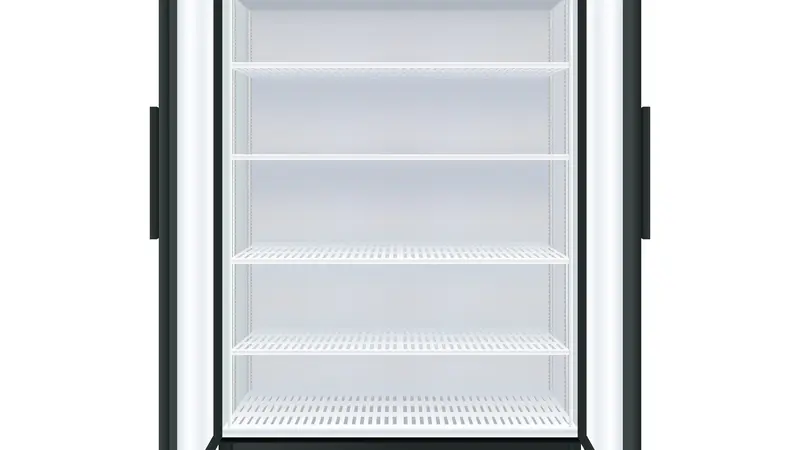
Choosing the perfect bar freezer is not merely about finding a place to store your food, beverages, and other edibles; it’s an opportunity to serve homes, commercial spaces, bars, and more.
Whether you’re a casual host or a commercial space owner, understanding the essential features and specifications can help you select a bar freezer that aligns seamlessly with your needs and preferences.
Let’s explore the key elements to consider when making this crucial decision.
Size and Capacity
Measure Your Space: Determine the size of the chosen space and measure its height, width, and depth. This allows a margin of at least a couple of inches on all sides and at the back for adequate ventilation.
Decide on Your Storage Space: Consider the quantity and type of items you will store. The general rule of thumb is approximately 2.5 cubic feet (or 100-150 liters) of freezer space per person in a small household.
Do not purchase a unit that is significantly larger than what you need, as an empty freezer consumes more energy than a reasonably full one.
Freezer Type
Upright Freezers: These freezers are more typically found in kitchens, have a smaller footprint, and include shelves and drawers, allowing easy access and organization. The vast majority of models are frost-free, eliminating the need for manual defrosting.
Chest Freezers: These freezers offer greater storage flexibility for large items (e.g., large portions of meat or bulk purchases), are typically more affordable, and are generally quieter.
Still, they take up more floor space, and you must bend down to reach the bottom. They generally require hand defrosting.
Location and Climate Class
Indoor vs. Outdoor/Garage: Standard freezers are designed for use in indoor, climate-controlled areas. When you intend to locate the unit in a garage, basement, or uninsulated space, be sure to select a model specially designated as “garage-ready” or “tropical-rated.” This ensures that it can run properly in varying ambient temperatures.
Built-in vs. Freestanding: Freestanding units need room around them to be ventilated (typically at the back of the units). On the contrary, built-in models have vents on the front bottom grill and can easily fit inside cabinetry to give a smooth appearance.
Energy Efficiency
To compare energy efficiency, look for the ENERGY STAR label (or a local energy rating label). A model with a high star rating will use less power and be cheaper to operate throughout its life.
Features
Temperature Control: Digital thermostats offer a high degree of temperature control, which is crucial in maintaining food quality.
Lighting: The interior LED lighting that aids in visibility, particularly during low-light situations.
Adjustable Shelving/Baskets: These will enable you to tailor the interior design to fit different things and enhance organization.
Door Alarms/Locks: An audible alarm notifies you if the door is left ajar, preventing food spoilage and energy wastage. Units in shared spaces or garages can have excellent security features, such as locks.
Noise Level: Consider models designed to be quiet, especially for home environments.